Go to https://givewell.org/minutephysics to have your first donation matched up to $100!
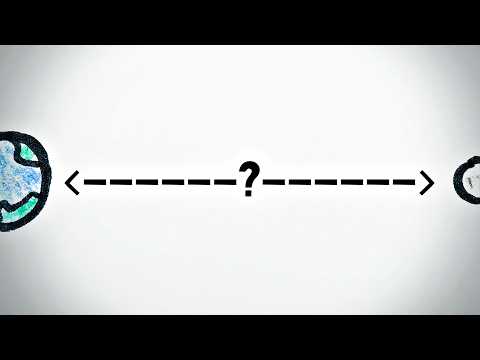
This video is about the physics of geosynchronous and geostationary orbits, why they exist, when they don't, when they're useful for communication/satellite TV, etc.
REFERENCES
Fraction of a sphere that's visible from a given distance
https://math.stackexchange.com/questions/1329130/what-fraction-of-a-sphere-can-an-external-observer-see
Orbital period
https://en.wikipedia.org/wiki/Orbital_period
Kepler's third law
https://en.wikipedia.org/wiki/Kepler%27s_laws_of_planetary_motion#Third_law
Kepler's 3rd law (which can be derived from Newton's law of gravitation and the centripetal force necessary for orbit as mr\omega^2=G\frac{mM}{r^2}, and using \omega=\frac{2\pi}{T}) is
T = 2pi Sqrt(r^3/(GM)) where M is the mass of the central object, G is the gravitational constant. Alternatively, we can solve for r, r = (T^2/(4pi^2) GM)^(1/3) ~ T^(2/3)/M^(1/3) = (T^2/M)^(1/3).
There is a limit (kind of like the Roche limit but for rotations). A rotating solid steel ball or other chunk of metal that has tensile strength (ie that isn't just a pile of stuff held together by gravity like most planets) would be able to spin faster.
Calculate how much of a planet's surface you can see from a given geosynchronous orbit/radius? (Obviously for lower ones you can see less, etc) - d/(2(R+d)) where d is distance to surface, ie, R is sphere radius, R+d is object radius from sphere center.
Let's plug that in with r being the geostationary orbit radius. That is, we have \frac{1}{2} \left(1- \left(\frac{4 \pi^2 R^3}{T^2 G M }\right)^{1/3}\right)
Average density of a sphere \rho is given by \rho =M/(\frac{4}{3}\pi R^3), ie \rho=\frac{3M}{4 \pi R^3} aka
\frac{M}{R^3}=\frac{4}{3}\pi \rho.
So we can convert the "fraction of planet surface seen" to
\frac{1}{2} \left(1- \left(\frac{3 \pi}{G \rho T^2}\right)^{1/3}\right)
So as either \rho or T\to \infty, the fraction goes to a maximum of \frac{1}{2}. And the point of "singularity" where the orbit coincides with the surface is where G\rho T^2=3\pi, aka \rho=\frac{3\pi}{GT^2}. For a rotation period of 3600s, that corresponds to a density \rho \approx 11000kg/m^3, which is roughly twice the density of the earth. For a rotation period of 5400s, we have \rho\approx 4800kg/m^3, which is basically the density of the earth.
Alternately, if we plug the density of the earth in to an orbit of period 5400s, we get as a fraction of the planet seen:
\frac{1}{2} \left(1- \left(\frac{3 \pi}{G \rho T^2}\right)^{1/3}\right) = 0.02
aka 2\% of the earth's surface.
Support MinutePhysics on Patreon! http://www.patreon.com/minutephysics
Link to Patreon Supporters: http://www.minutephysics.com/supporters/
MinutePhysics is on twitter - @minutephysics
And facebook - http://facebook.com/minutephysics
Minute Physics provides an energetic and entertaining view of old and new problems in physics -- all in a minute!
Created by Henry Reich
I'm pretty sure a 10 second delay would be fine for TV, it would be a pain for video calls. Though, for live streams, where chat is communicating through text, once again, is 100% fine.
@titin-Ri-Hs Says:
the apple hit the equation
@Tamizushi Says:
To be fair, the goldilocks zone here is pretty wide.
@Tyler-s2e Says:
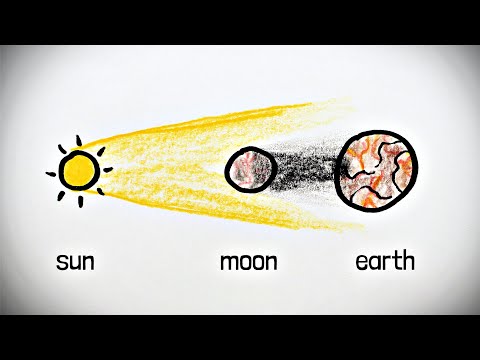
Could an elliptical orbit of the earth be occulted by the moon four times per month? For studying the gravitational lensing of the sun. Even if the telescope is only in position for imaging three times per month, it would be way more than we can do by waiting for solar eclipses.
@FernandoJose-777e Says:
They still orbit
@iconicmessi123 Says:
Ah yes, evolution! truly inspiring. Who would have thought orbits evolve!
@largestudent198 Says:
I hope other people's minds are better than ever.
@raideurng2508 Says:
Geostationary orbits aren't perfect. They're considered too far for many applications that require very short latency and are being replaced by constellations of lower orbit satellites that are networked.
@kenny49494949 Says:
Great video for visualizing orbits!
@petergerdes1094 Says:
Actually a much lower geosynchronous orbit would be **much** more useful. There wouy be the nice latency features but more importantly you'd only need to get that high to build a space elevator!
@mr.johncharlescharlie3502 Says:
Orbiting a ball or orbiting a dog ??? This is not productive for serious young students who are not native speakers. "Why did he say that?" ... The lighthearted joking isn't useful for young students. Otherwise, good job.
@RogatkaMC Says:
We just watched this in class
@tiredironrepair Says:
They're fake like the moon landings
@Great.Milenko Says:
perhaps there is some mechanism that means the goldilocks zone for life (rotation speed of planet, mass of planet, distance from the sun, etc) will always be the same as the goldilocks zone for geostationary satellites. like... if a planet was too massive, or rotated too slowly, life would be unsustainable.
@Laj.Kossuth Says:
I could be wrong but I am fairly certain the 1.3 light seconds to geo sync would orbit was meant for the moon, geo sync is about ten times closer to
@guilleminbruno7898 Says:
The voice is awful
@sunnygan90 Says:
rare oversight on the satellite tv point; that is a communication problem
@whatif_question Says:
The inclusion of diagrams and on-screen footnotes greatly enhances the viewer's understanding of orbital mechanics. It’s a perfect example of how visual elements can complement and elevate complex scientific explanations.
@TimpBizkit Says:
I wonder what the geostationary orbit of something like a pulsar spinning at 60,000 rpm or something is. I mean it has to be tightly bound by gravity to stop it flying apart at that speed, so the geostationary orbit of a pulsar would be above its surface. I mean something the size of a city whizzing round faster than a giant angle grinder boggles the mind. The main challenge would be building a satellite that didn't disintegrate. Can you get it truly weightless or is gravity a metre closer so much stronger that it can tear you in two? That's how you can get ripped apart by tidal forces because you might be at a few billion g, and then just one metre closer you are at a few billion and ten.
@Delibro Says:
So, if the earth would rotate in about an hour rather than 24 hours, we could be weightless at the equator and normal weight at the poles. Seems much fun.
(Yea, the earth's shape would adapt .... don't kill my fun :D )
@OutrageousPenalty Says:
So you're telling me that a planet could potentially exist where we could be floating at sea level and flying ?
@jeremy5602 Says:
Ahh yes, yet more proof that Earth was created and not formed. How else would we be able to have geosynchronous orbits? Surely it's not just bias since we _do_ have geosynchronous orbits to say that we're so lucky to have them that it had to be made specifically that way.
@Allthegoodhandlesaretakenlmao Says:
Any KSP player knows that the biggest problem is how there always seems to be a moon exactly where a geosynchronous orbit would go
@Caramelldanson Says:
In the cases where the synchronous orbit is too low/high, could it still be useful to use an orbit with a period that is an integer multiple/fraction of the synchronous orbit?
@maxmisterman785 Says:
3:39 Corection: satelite tv should be one of the things that works without problem, the delay is between the filming of stuff and the timing of you wathing it and normally not randomly between signals. So you would see the sportsgame next door an hour late, but watching it smoothly. even normal streaming of live tv has delays so that a thing we are already planning around: it would just take longer. Moon missions already have the problem of relativly long delay.
@trapjohnson Says:
All these coincidences...
@TorrenSnyder-e3u Says:
Hi tech geosynchronous orbit non lethal acoustic gaslighting weapons hanger satellite systems. Don't believe in " psychic powers " as well your schizophrenia. Call me Dale gribble you may be right but it's something to consider as everything has a logical explanation. Anywho be very PARANOID lol... Excuse me
@michaelbullock7747 Says:
Not many of your viewers are from planets that spin every 90 minutes.
@gnothisauton2116 Says:
Awesome ending!
@bussi7859 Says:
Crap full of errors
@altebander2767 Says:
Well the argument about further geostationary orbits needing more power is actually flawed. Yes, the inverse square law applies, but that's not what's relevant about such microwave links. Broadcast satellites typically don't radiate spherically, but rather directed. In fact it's common to focus all the power on a single country or continent. In that scenario it doesn't matter how long the cone is, but just how big the area is that you want to cover. Of course there are practical limits as eventually you will need impracticably big antennas on your satellites, but that's a fairly solvable problem.
Delay times are a much bigger problem, and it's one of the main reasons so few telephony and Internet links go via satellite. A quarter of a second is just barely usable if you want to make a telephone call.
@MrSaemichlaus Says:
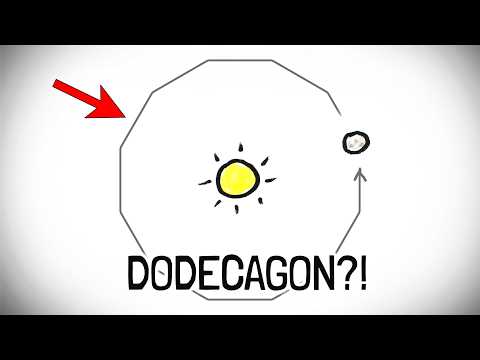
If a planet is spinning relatively fast, multiple satellites could be put in very eccentric orbits that are offset by some longitude, their intersection area forming a roughly polygonal orbit out of multiple flybys. They would each follow one side of that polygon, then hand communications off to the next one and go on the far out section of their eccentric orbit before flying by earth again. Though this would mean that each satellite is pretty useless for most of its journey, and if the planet has a significant atmosphere like earth, the satellites would lose lots of energy while transiting through it.
@freelancer001 Says:
Problem z odległymi orbitami jest taki że przekazywanie nie może być szybsze spowodowane przez czas opóźnienia ale czy to do końca ważna nie ponieważ instrukcja będzie przekazywana w niewielkich pakietach praca będzie wykonywała się identycznie tylko z opóźnieniem
Na przykład jak w filmie Marsjanin
@DoggosAndJiuJitsu Says:
Look. I’m not gonna lie. Whenever I launch a satellite it never goes over 240km.
@ariatari2137 Says:
3:20 or it could be just above earths sphere of influence
So point 1-2.... 1.5
They dont exist but in point 2 because they are too far ugh you get it
@ariatari2137 Says:
No? They arent? This is how it wirks. Physics
@Rybagz Says:
Why would greater distance matter for satellite TV beside signal strength? The extra latency only really matters if it's 2-way communications.
@jah211084 Says:
Thank you for using the sidereal day for the length of the “day”.
Great to see
@BakriHmouda Says:
More proof that things were not just created with some random big explosion.
@MiG-25IsGOAT Says:
Flat earthers have left the chat
@semajniomet981 Says:
`3:05 Something that you didn't mention but would be painfully obvious would be that it wouldn't be geosynchronous very long due to being in the Earth's atmosphere.
@lanceleavitt7472 Says:
Perfectly presented. -- Thanks for the great upload. ---
@quinny-bn4jw Says:
I am commenting #BringBackDislikes on every unique YouTube video that I watch for the rest of 2024, regardless of if I actually dislike the video or not. This is video 689.
@lain006. Says:
Extra fact: they also stan loona
@robertsteinbach7325 Says:
Prerecorded satellite TV work pretty well on an Earthlike planet with a Venus like rotation. We used to Large Receiving Dishes for Satellite TV. We are in the Goldilocks zone for satellite internet and satellite phone. That itself is amazing.
@milanthusitha2127 Says:
brilliant ✨🌟💫
@gandalfwiz20007 Says:
Where are the flatards?
@laureng2110 Says:
These subtitles are unusable. Hard of hearing people don't want your editing notes, they want to know what you just said.








LATEST COMMENTS